
Nazification of the School of Theology in Jena
The University of Jena’s School of Protestant Theology largely had politically und theologically liberal leanings until 1933. In the second half of 1933 however, the Thuringian Ministry of Public Education headed by Siegfried Leffler, a radical German Christian and senior civil servant, began to reorganize the school in the spirit of National Socialism.
To this end, the ministry appointed Wolf Meyer-Erlach (1891–1982), an academically inadequately qualified but loyal German Christian, to the Chair of Practical Theology and ousted the previous chair holder. Meyer-Erlach, who had primarily distinguished himself through his radical Nazi activities in Bavaria, became president of the University of Jena two years after his appointment.
Meyer-Erlach and Leffler spared no effort to install other Nazi theologians in the school. Until 1936, the chairs had still been divided equally among German Christians, liberal theologians and adherents of the Confessing Church. The orientation among the student body was also divided similarly.
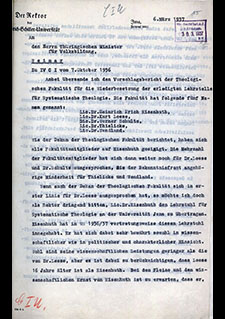
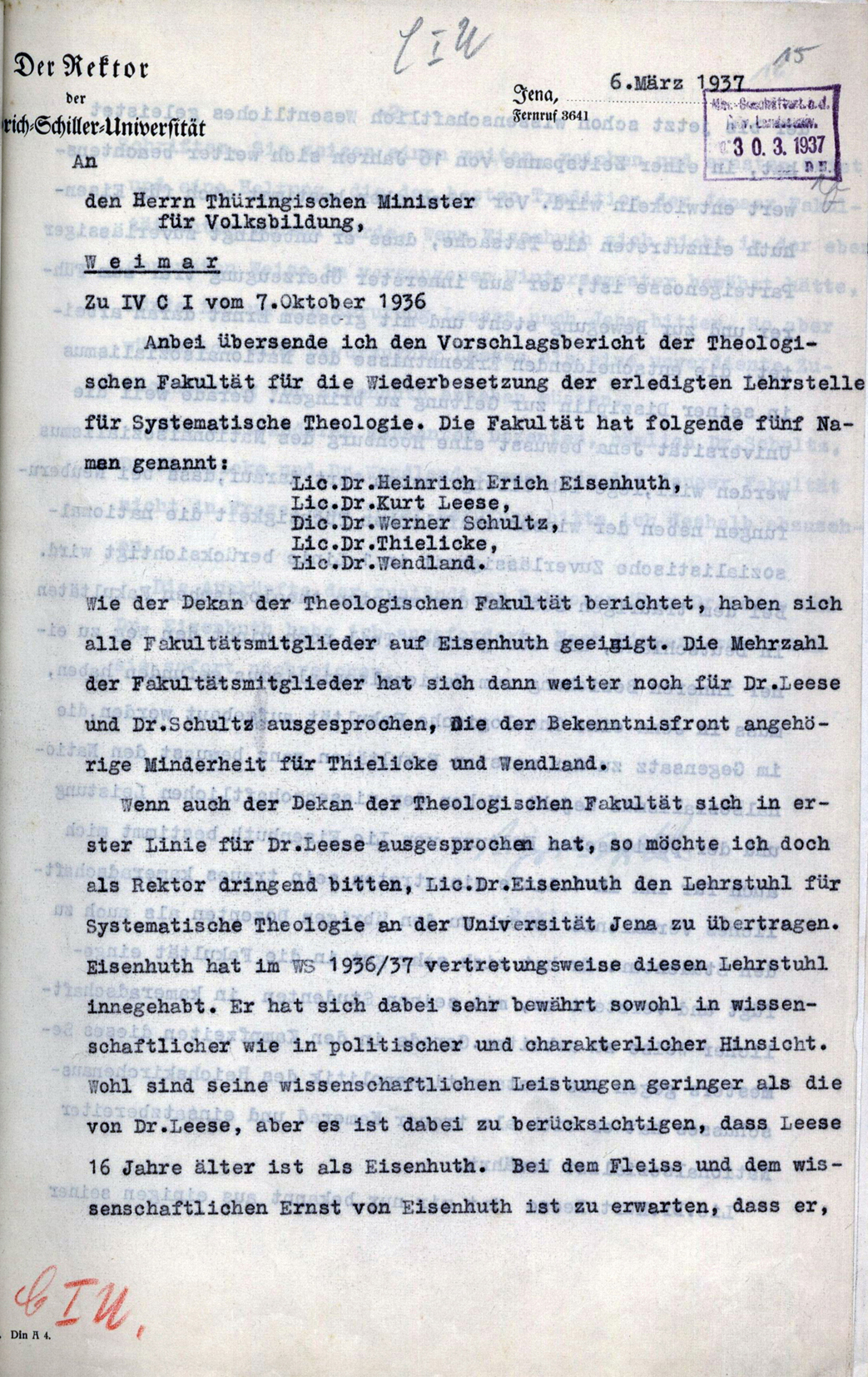
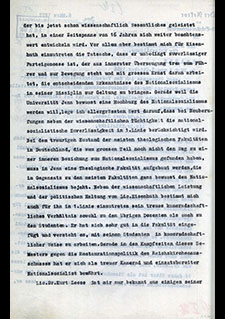
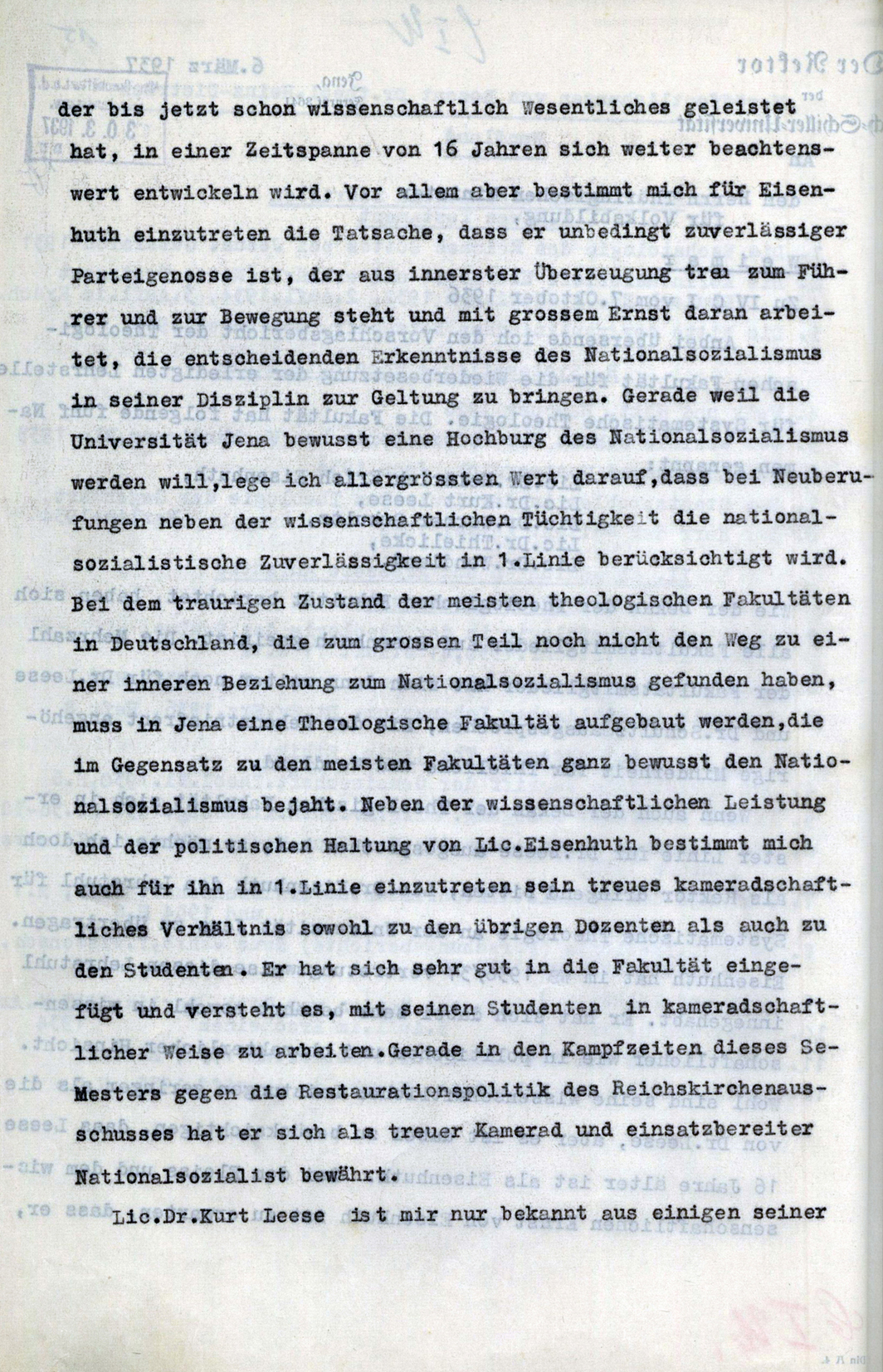
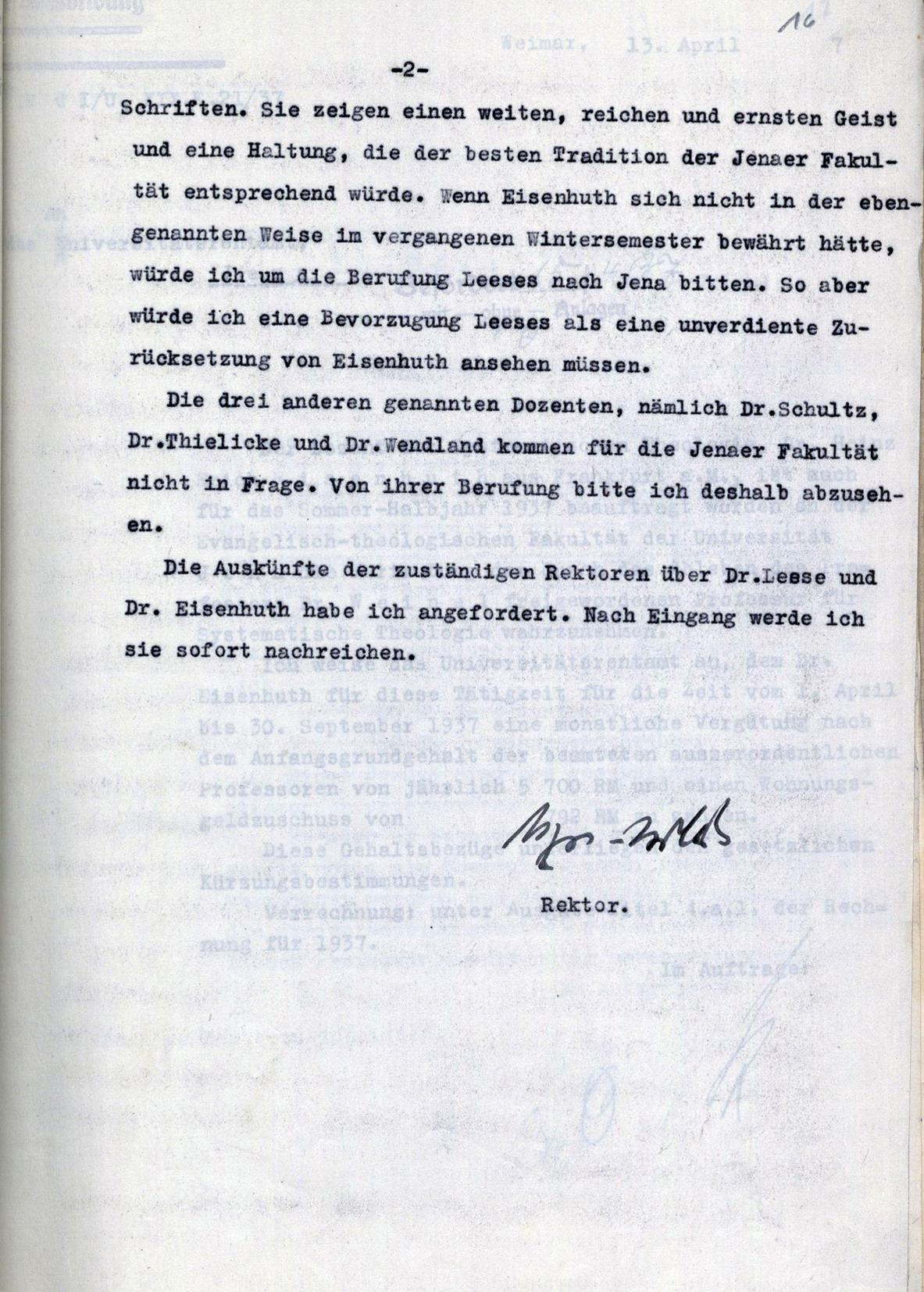
This changed when Meyer-Erlach succeeded in filling the Chair of Systematic Theology with the loyal Nazi and SA member Heinz Erich Eisenhuth (1903–1983). In addition, Walter Grundmann (1906–1976) received an appointment in 1936 to teach völkisch theology.
Grundmann was the dominant figure of the School of Theology and the German Christians until 1945; he additionally rose to prominence in 1939 as the founder and director of the church’s anti-Semitic “Institute for Research into and Elimination of Jewish Influence in German Church Life” in Eisenach. Thanks to Meyer-Erlach and Leffler’s hiring policy, the formerly liberal school in Jena was thenceforth clearly imbued with the spirit of National Socialism.
In May of 1938, the school drafted a memorandum that envisioned a comprehensive reform of the theology program and the schools of theology. Theology was primarily understood to be religious studies since religious life in general is a crucial factor in the history and the life of our German nation and the nations. German piety was also supposed to be reappraised accordingly.
The intention to rename disciplines such as New Testament as Gospel Lore and the Beginnings of Christianity and Old Testament as the Department of the History of Religion of the Middle East was characteristic. Courses such as the Aryans’ Faith and World View, the abolition of Hebrew language requirements and the rejection of numerous dissertations that did not conform to Nazi racial ideology were among the numerous attempts to put this program imbued by Nazism into practice in Jena.
Source / title
- ©Universitätsarchiv Jena, Personalakte H. E. Eisenhuth, Bestand D, No. 603, Fol. 15r–16v.